The Complete RAG Evaluation Pipeline
A practical guide to evaluating Retrieval-Augmented Generation (RAG) applications in production.
AI RAG LLM GenAI Evaluation AI Engineering Production AI
# The Complete RAG Evaluation Pipeline
How to Measure, Monitor, and Improve Production RAG Applications
Building a Retrieval-Augmented Generation (RAG) application is no longer the difficult part. Modern frameworks can get a chatbot running in a matter of hours.
The real challenge begins after deployment.
How do you know the retriever is finding the right documents? How do you detect hallucinations before users report them? What happens when you upgrade your embedding model or change a prompt?
A production-ready RAG system isn't defined by how well it answers a few demo questions. It's defined by how consistently it delivers accurate, grounded, and reliable responses at scale. That gap between a working demo and a system that holds up in production is explored further in From AI Demo to Production.
This article walks through a practical evaluation pipeline used by production AI applications, drawn from hands-on work shipping RAG systems for startups.
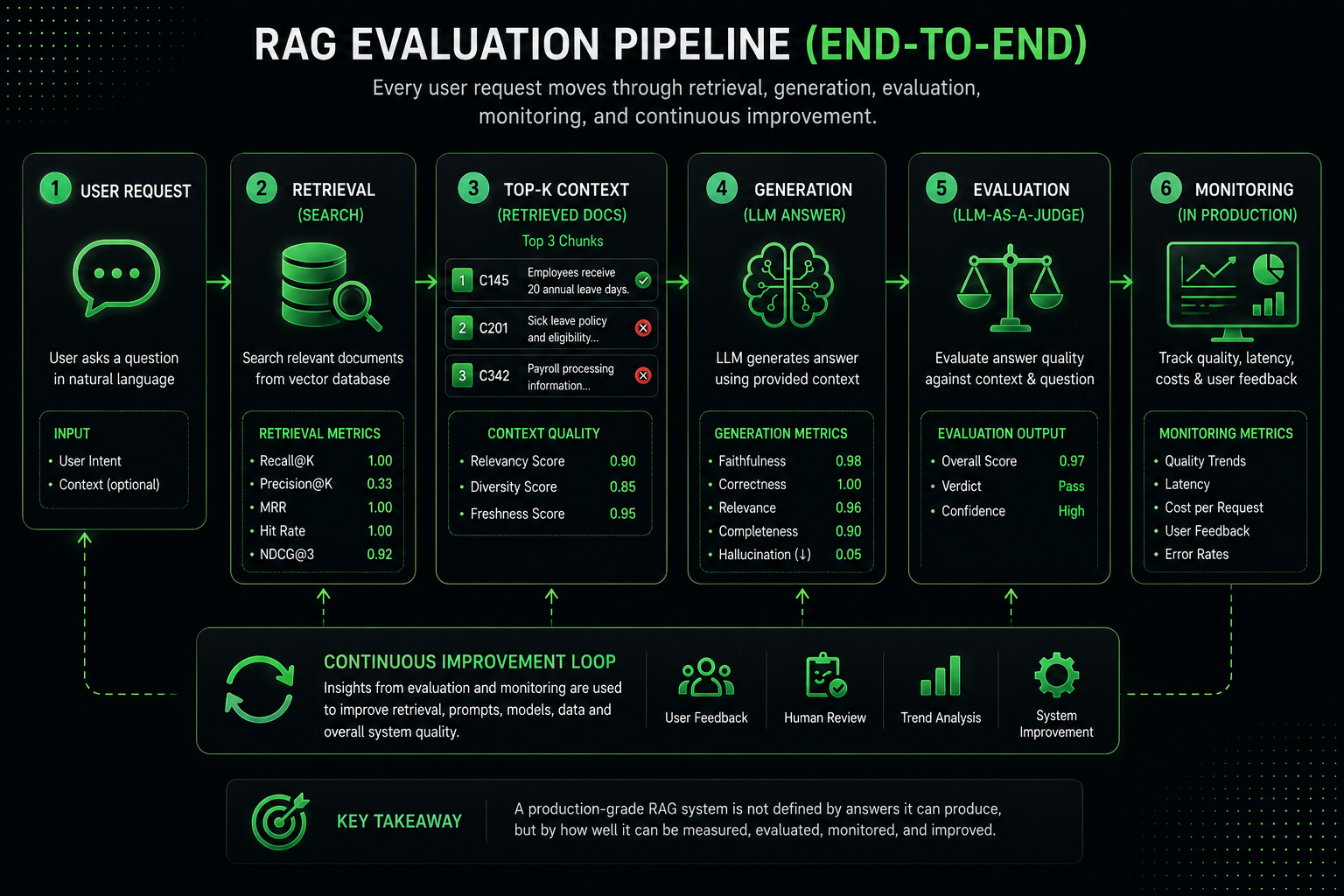
*Figure 1. Every user request moves through retrieval, generation, evaluation, monitoring, and continuous improvement.*
The Evaluation Pipeline
Every question follows the same lifecycle.
- Retrieve relevant documents.
- Generate an answer using those documents.
- Evaluate the answer automatically.
- Collect user feedback.
- Monitor quality in production.
- Continuously improve the system.
Each stage answers a different question.
| Stage | Question | | ----------- | --------------------------------------------- | | Retrieval | Did we retrieve the right information? | | Generation | Did the model use that information correctly? | | Evaluation | Is the answer trustworthy? | | Monitoring | Is the system healthy in production? | | Improvement | Is the next release actually better? |
Start by Evaluating Retrieval
Most RAG failures aren't caused by the LLM—they start with retrieval.
If the retriever returns outdated, incomplete, or irrelevant documents, even the best language model cannot generate a reliable answer.
Instead of evaluating only the final response, first evaluate the documents returned by your search layer.
The most commonly used retrieval metrics are:
| Metric | What it Measures | Target | | ----------------- | ------------------------------------------- | ---------- | | Recall\@K | Were all relevant documents retrieved? | >95% | | Precision\@K | Were retrieved documents actually relevant? | >80% | | MRR | Was the best document ranked first? | >0.80 | | Retrieval Latency | How fast was the search? | \<150 ms |
For example, consider the following search result.
Question
> What is our refund policy?
Retrieved Documents
- Shipping Policy
- Privacy Policy
- Refund Policy
Although the correct document exists, it appears too low in the ranking. The language model now receives unnecessary context before reaching the answer.
Improving retrieval quality often provides a larger improvement than switching to a bigger language model.
Then Evaluate the Generated Answer
Once the correct context is retrieved, the next step is verifying that the model actually uses it.
A good answer should be:
- Accurate
- Grounded
- Relevant
- Complete
The following metrics are commonly used to evaluate generated responses.
| Metric | Purpose | | ------------------ | --------------------------------------------- | | Faithfulness | Every claim is supported by retrieved context | | Correctness | Facts are accurate | | Relevance | Answers the user's question | | Completeness | Important information isn't missing | | Hallucination Rate | Measures unsupported claims |
Consider this example.
Retrieved Context
> Employees receive 20 days of annual leave.
Generated Response
> Employees receive 20 days of annual leave plus unlimited paid sick leave.
The first statement is supported.
The second statement isn't.
This is a classic hallucination.
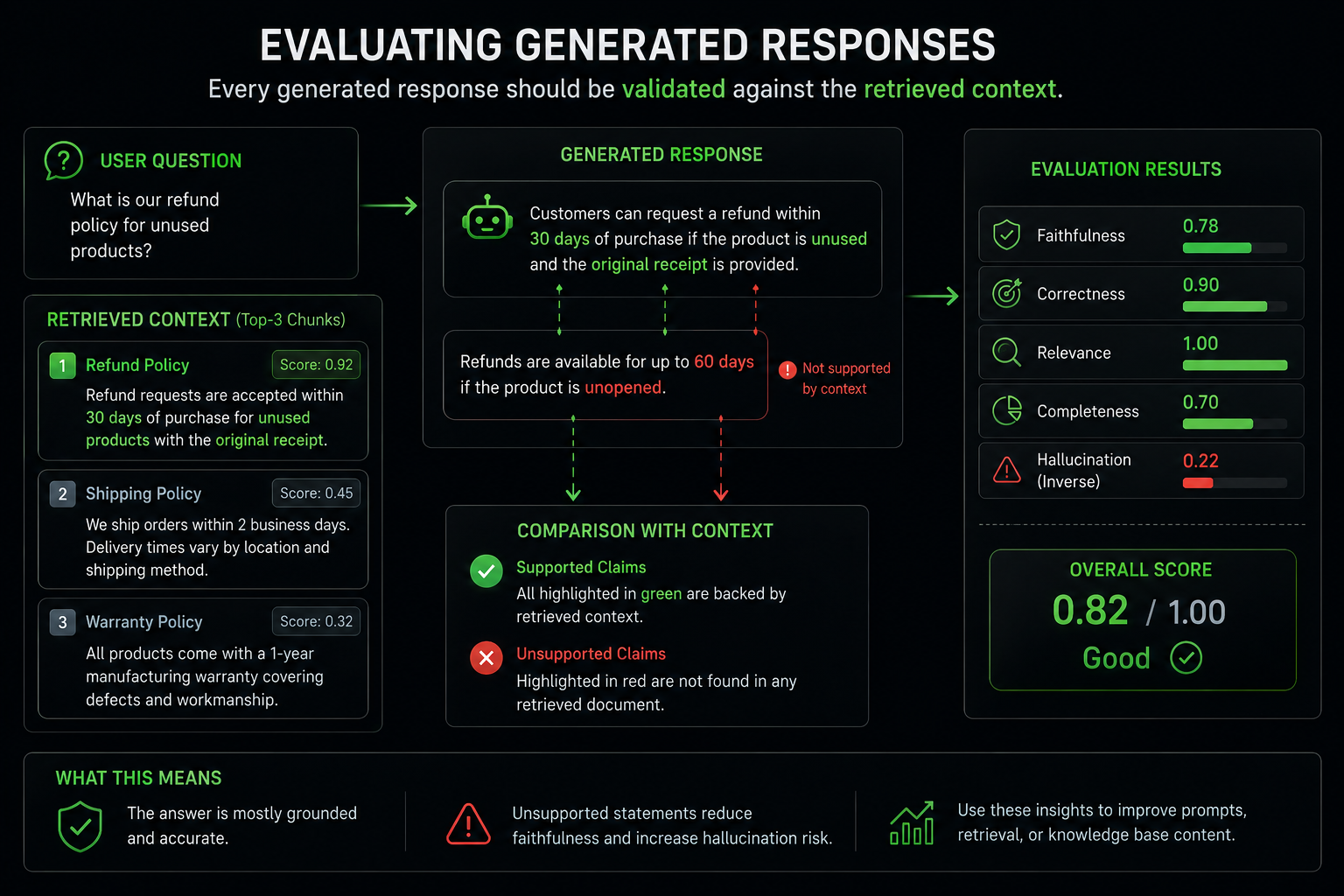
*Figure 2. Every generated response should be validated against the retrieved context.*
Automate Evaluation with an LLM
Manually reviewing thousands of conversations isn't practical.
Modern RAG systems use another language model as an evaluator.
Instead of generating answers, the evaluation model compares:
- User Question
- Retrieved Context
- Generated Answer
It then scores the response for:
- Faithfulness
- Correctness
- Relevance
- Completeness
- Hallucination
These scores can be stored alongside every conversation, allowing engineering teams to monitor quality over time and compare model versions before deployment.
Monitor Production, Not Just Infrastructure
A healthy API doesn't always mean a healthy AI system.
Alongside CPU, memory, and response time, monitor AI-specific metrics such as:
- Faithfulness Score
- Hallucination Rate
- Retrieval Accuracy
- User Feedback Score
- Token Usage
- Cost per Request
Quality issues often appear long before traditional infrastructure alerts.
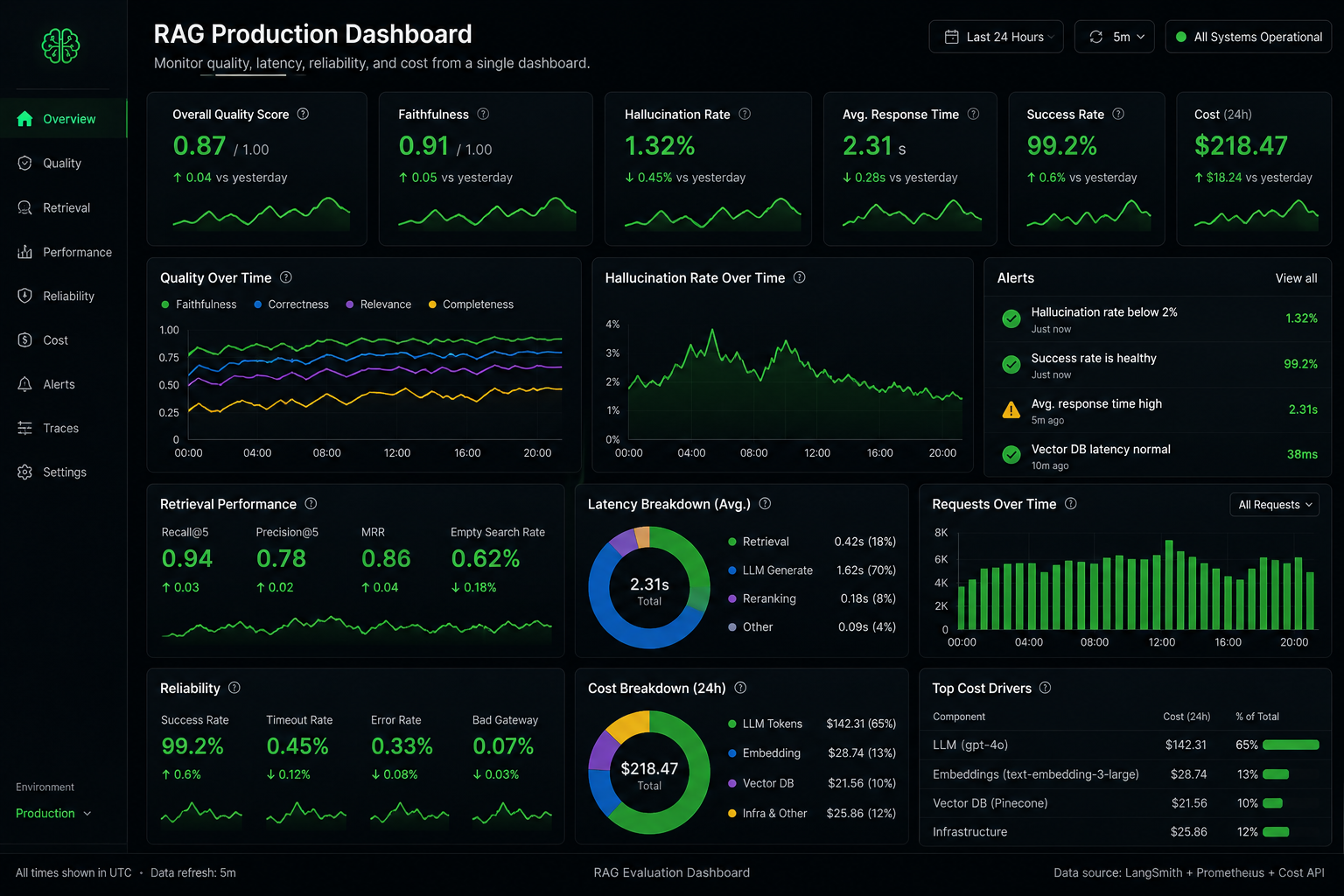
*Figure 3. Monitor quality, latency, reliability, and cost from a single dashboard.*
Continuously Improve
Evaluation isn't a one-time task.
Every production conversation becomes an opportunity to improve the system.
A typical improvement cycle looks like this:
- Collect production conversations.
- Identify low-quality responses.
- Add them to a benchmark dataset.
- Improve retrieval, prompts, or models.
- Run automated evaluations.
- Deploy only if quality improves.
This continuous feedback loop ensures that every release makes the application more reliable than the previous one.
Recommended Tooling
| Purpose | Popular Tools | | -------------------- | ---------------------------------- | | Retrieval Evaluation | Ragas, DeepEval | | LLM Evaluation | DeepEval, Ragas, TruLens | | Observability | LangSmith, Langfuse, Arize Phoenix | | Monitoring | Prometheus, Grafana | | Vector Database | pgvector, Qdrant, Pinecone | | Benchmark Dataset | PostgreSQL, JSON, CSV |
Final Thoughts
A RAG application isn't production-ready because it answers questions.
It's production-ready because every answer can be measured, evaluated, monitored, and improved.
Start by evaluating retrieval. Measure generation quality independently. Automate evaluation with an LLM, monitor the system in production, and continuously validate every change before deployment.
That evaluation pipeline—not the language model itself—is what makes a production AI system reliable.
If you're building a RAG system that needs to hold up past the demo, let's talk about what a production evaluation pipeline should look like for your product.